Why the Best Renovation Websites Guide Visitors Instead of Simply Showing Off Projects
 Most renovation websites are packed with beautiful photographs. Gleaming kitchens, luxurious bathrooms, stylish extensions and perfectly finished living spaces all compete for attention. They certainly make an impressive first impression. The trouble is that admiration alone rarely convinces someone to pick up the phone or complete an enquiry form. Homeowners usually arrive with questions, uncertainties and a head full of competing ideas. A website that helps answer those questions often becomes far more persuasive than one that simply displays another gallery of polished results.
A renovation project represents a significant investment. Visitors are not just shopping for attractive designs; they are looking for reassurance that they understand the journey ahead. The companies that appreciate this tend to create websites that educate as much as they inspire. Instead of saying, "Look what we built," they quietly answer the next question before the visitor has even thought to ask it.
People Want Direction More Than Decoration
Someone planning a renovation rarely begins with complete confidence. They might be wondering whether planning permission is required, how long work will take, or whether their budget is realistic. A collection of beautiful images cannot answer those concerns.
Helpful websites recognise that visitors are trying to solve problems rather than simply admire architecture. Service pages that explain exactly what is included, who the service suits and what clients should expect remove uncertainty. Every useful answer builds a little more trust.
Think of it like visiting a restaurant. A beautiful dining room catches your eye, but if the menu consists entirely of glamorous photographs with no descriptions, prices or ingredients, choosing dinner becomes surprisingly stressful. Renovation websites can fall into exactly the same trap.
Planning Guides Build Confidence
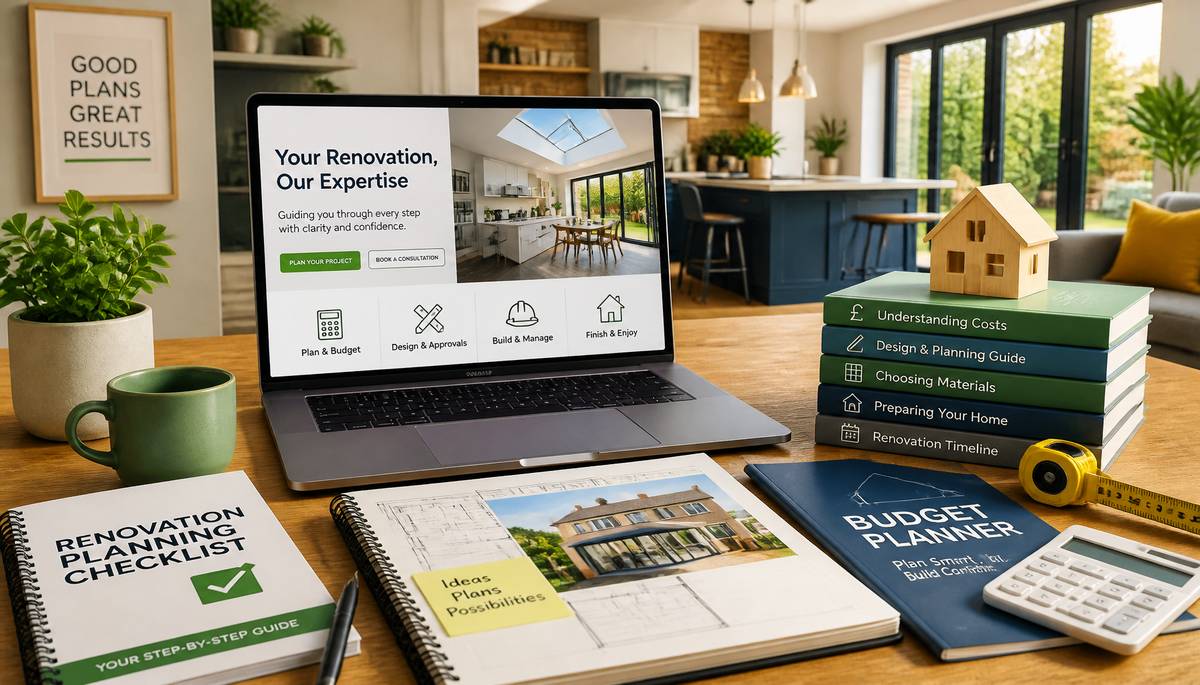
One of the most valuable additions to any renovation website is a practical planning guide. Rather than expecting visitors to understand the process, the website walks them through it step by step.
Topics might include:
- Preparing for an initial consultation.
- Setting realistic renovation budgets.
- Understanding design and planning stages.
- Choosing suitable materials.
- Preparing the home before work begins.
Content like this demonstrates expertise without constantly saying, "We're experts." Visitors naturally begin viewing the company as a reliable source of information, which makes making contact feel like the logical next step rather than a leap into the unknown.
Interactive Content Keeps Visitors Exploring
Modern websites no longer need to behave like digital brochures. Interactive features encourage visitors to spend more time exploring information that matters to them personally.
Budget calculators, project timelines, downloadable checklists and renovation planning tools all provide genuine value. Even something as straightforward as allowing visitors to compare different renovation options creates engagement that static photographs simply cannot match.
Longer visits also create another benefit. Instead of quickly glancing through six photographs before disappearing, visitors develop familiarity with the business. That extra time often translates into greater confidence because people tend to trust organisations they have spent time getting to know.
Explaining the Process Removes Anxiety
Renovations involve dozens of moving parts, and uncertainty often creates hesitation. Many homeowners imagine weeks of confusion, missed deliveries, disappearing contractors and a living room that somehow becomes a temporary warehouse for mysterious pipes.
A website that clearly explains each stage of the renovation journey helps replace uncertainty with realistic expectations. From the initial consultation through design, quotations, scheduling, construction and final completion, each step becomes easier to understand.
When visitors know what comes next, the entire project feels more manageable. Instead of wondering what surprises might appear around every corner, they begin to picture a structured process guided by experienced professionals.
Educational Content Creates Long-Term Value
Educational articles, frequently asked questions and practical resources continue working long after they have been published. While project galleries tend to showcase completed work, educational content supports visitors at every stage of their decision-making process.
Someone may not be ready to begin renovating today. They might still be comparing ideas, researching costs or discussing possibilities with family members. Helpful articles give them reasons to return repeatedly, gradually building familiarity with the company behind the website.
Subjects such as avoiding common renovation mistakes, choosing between an extension and a loft conversion, understanding building regulations or deciding where to invest the budget provide genuine assistance. Visitors appreciate guidance that feels impartial rather than promotional, making them far more likely to remember the business when the project finally moves forward.
Strong Calls to Action Feel Natural
Once a visitor has been guided through useful information, making an enquiry becomes the obvious next step instead of an uncomfortable sales moment.
Rather than scattering oversized "Contact Us Now" buttons across every page like confetti at a wedding, effective renovation websites place calls to action where they make sense. After explaining budgets, invite visitors to request an estimate. After outlining the renovation process, encourage them to arrange a consultation. After discussing planning considerations, offer a downloadable checklist alongside an enquiry form.
Each invitation feels connected to the information the visitor has just consumed, making the transition smooth instead of abrupt.
Trust Is Built Through Clarity Rather Than Noise
Clear explanations often leave a stronger impression than flashy animations or complicated visual effects. Visitors appreciate straightforward navigation, well-organised service pages and content that answers their questions without forcing them to hunt through endless menus.
Testimonials, case studies and project photographs still have an important place, but they work best when supporting educational content instead of replacing it. A gallery demonstrates capability, while informative content demonstrates understanding. Together they create a much stronger overall impression than either could achieve alone.
The most successful renovation websites understand that every visitor arrives with a different level of knowledge. Some need reassurance, others need technical information and many simply want confirmation that they are making sensible decisions. The website should comfortably accommodate all of them.
Blueprints for Better Enquiries
The strongest renovation websites do far more than display attractive finished rooms. They guide visitors through the questions, decisions and uncertainties that naturally arise before any building work begins. Every informative article, planning resource, budgeting guide and clearly explained process helps transform curiosity into confidence.
Beautiful project photography will always have its place, but inspiration alone rarely completes an enquiry form. When a website actively helps people understand what lies ahead, it becomes a trusted companion rather than a digital showroom. Visitors leave feeling informed instead of overwhelmed, confident instead of uncertain, and far more prepared to begin a conversation with the renovation company that helped them long before the first brick was ever laid.
|
|